
A Beginner's Guide for Small Business Owners
Estimated Reading Time: 10–12 Minutes
Introduction
When I first started learning about marketing, I believed it was all about creating advertisements or convincing people to buy a product. The more I studied, the more I realized that marketing is much bigger than that.
Marketing is about understanding people. It's about identifying what customers need, creating solutions that genuinely help them, and communicating those solutions in a way that builds trust.
Whether you own a café, a clothing store, a bakery, a salon, or an online business, marketing plays a major role in helping people discover your brand. Even the best product in the world won't sell if no one knows it exists.
In this article, I'll share what I've learned so far as a digital marketing student. My goal is to explain marketing in simple terms so that anyone—especially small business owners—can understand how it works and why it's important.
What is Marketing?
Marketing is the process of understanding customer needs and delivering value through products or services.
Many people think marketing starts after a product is created. In reality, marketing begins much earlier.
Before launching a product, businesses ask questions like:
Who are our customers?
What problems do they face?
What solution can we provide?
Why should customers choose us over competitors?
The answers to these questions shape everything from the product itself to the price, branding, advertising, and customer experience.
Marketing is not just about making sales—it is about creating value.
Why is Marketing Important?
Imagine opening a restaurant with amazing food, friendly staff, and beautiful interiors.
Now imagine nobody knows it exists.
Without marketing, people may never visit your restaurant.
Marketing helps businesses:
Increase awareness
Build trust
Reach the right audience
Attract new customers
Retain existing customers
Increase sales
Build a recognizable brand
A good product can bring customers once, but good marketing helps bring them back again.
The Evolution of Marketing
Marketing has changed significantly over time.
Traditional Marketing
Before the internet, businesses promoted themselves through:
Newspapers
Television
Radio
Magazines
Billboards
Flyers
Direct mail
These methods helped businesses reach large audiences, but it was difficult to measure results accurately.
Digital Marketing
Today, businesses connect with customers through digital platforms like:
Google Search
Websites
Instagram
Facebook
LinkedIn
YouTube
Email
WhatsApp
One of the biggest advantages of digital marketing is that businesses can measure almost everything, including website visitors, ad performance, clicks, and customer behavior.
Traditional Marketing vs Digital Marketing
| Traditional Marketing | Digital Marketing |
|---|---|
| Newspaper ads | Google Ads |
| TV commercials | YouTube Ads |
| Billboards | Social Media |
| Flyers | Email Marketing |
| Difficult to measure | Easy to track |
| Expensive | Flexible for different budgets |
Traditional marketing still has its place, but digital marketing offers more flexibility, especially for small businesses with limited budgets.
Understanding Your Customers
One of the biggest lessons I've learned is that successful marketing starts with understanding people.
Instead of asking:
"How can I sell my product?"
Ask:
"How can I solve my customer's problem?"
For example:
A bakery doesn't just sell cakes.
It helps people celebrate birthdays.
A travel agency doesn't simply sell tour packages.
It creates memorable experiences.
When businesses understand the emotions behind a purchase, they create stronger connections with customers.
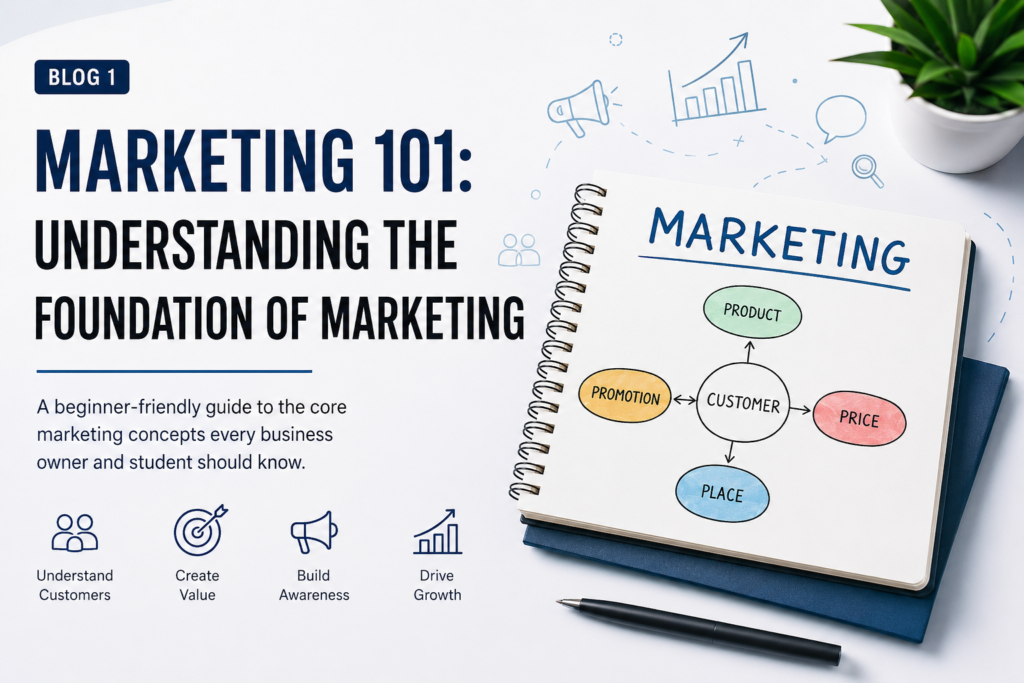
The Marketing Mix: The 4Ps
The Marketing Mix helps businesses plan their strategy.
Product
What are you selling?
Your product should solve a problem or fulfill a need.
Example:
A reusable water bottle isn't just a bottle—it offers convenience while reducing plastic waste.
Price
How much should customers pay?
Pricing should reflect the product's value while staying competitive.
Too expensive, and customers may look elsewhere.
Too cheap, and people may question its quality.
Place
Where can customers buy your product?
Options include:
Physical stores
Websites
Online marketplaces
Social media shops
The easier it is for customers to buy, the better.
Promotion
How will people discover your product?
Promotion includes:
Social media posts
Google Ads
SEO
Email campaigns
Influencer collaborations
Content marketing
Promotion creates awareness and encourages customers to take action.
What About the 7Ps?
For service-based businesses, three additional elements are important:
People
Employees and customer service greatly influence customer satisfaction.
Process
How smooth is the customer experience?
Simple ordering, fast delivery, and responsive support improve customer satisfaction.
Physical Evidence
Customers often judge a business based on visual cues like:
Store appearance
Website design
Packaging
Reviews
Branding
These elements build credibility.
Branding: More Than Just a Logo
Many people think branding is only about logos and colors.
Branding is actually how people feel about your business.
Consider these questions:
What do customers think when they hear your business name?
What emotions does your brand create?
Why should someone trust your business?
Your brand is built through every interaction, from your social media posts to your customer service.
Understanding Consumer Behavior
Customers don't always buy based on logic.
Emotions, recommendations, reviews, and trust influence purchasing decisions.
Some common reasons people buy include:
Convenience
Quality
Price
Status
Recommendations
Positive experiences
Emotional connection
Understanding these motivations helps businesses create better marketing strategies.
The Importance of Market Research
Before launching a product or campaign, businesses should understand:
Who their competitors are
What customers want
Current market trends
Pricing expectations
Customer feedback
Even simple research, like reading online reviews or talking to customers, can provide valuable insights.
Common Marketing Mistakes
As I continue learning, I've noticed several mistakes that businesses often make.
Trying to Sell Too Quickly
People usually buy from brands they trust.
Building relationships comes before making sales.
Ignoring Customer Feedback
Reviews and feedback are opportunities to improve.
Listening to customers shows that you value their opinions.
Inconsistent Branding
Using different logos, colors, or messaging across platforms can confuse customers.
Consistency builds recognition and trust.
Forgetting Existing Customers
Many businesses focus only on attracting new customers.
Keeping existing customers happy is often more cost-effective than constantly finding new ones.
Real-World Example
Imagine two coffee shops on the same street.
Both serve excellent coffee.
The first shop rarely posts online, has no website, and depends only on walk-in customers.
The second shop regularly shares photos on Instagram, appears on Google Maps, responds to reviews, and offers loyalty rewards through email.
Over time, the second business is likely to attract more customers—not because its coffee is better, but because more people know about it and trust it.
That's the power of marketing.
Quick Tips for Small Business Owners
Understand your ideal customer before spending money on advertising.
Build a strong and consistent brand identity.
Listen to customer feedback regularly.
Focus on solving problems instead of just selling products.
Stay active on at least one digital platform where your audience spends time.
Remember that consistency often delivers better results than perfection.
What I've Learned
One of the biggest lessons I've learned as a digital marketing student is that marketing isn't about convincing people to buy something they don't need.
It's about understanding people, solving real problems, and communicating value in a way that builds trust.
The more I learn, the more I realize that successful marketing begins with empathy. Businesses that genuinely care about their customers are more likely to build lasting relationships and grow over time.
Frequently Asked Questions
Is marketing only for large companies?
No. Marketing is important for businesses of every size. In fact, small businesses often benefit the most because effective marketing helps them compete with larger brands.
Do I need a large budget to market my business?
Not necessarily. Many digital marketing strategies, such as creating helpful content, improving your Google Business Profile, and posting consistently on social media, can be done with little to no cost.
Is marketing the same as advertising?
No. Advertising is just one part of marketing. Marketing also includes research, branding, pricing, customer relationships, product development, and more.
What should I learn first if I'm new to marketing?
Start by understanding your customers. Once you know who you're trying to help, it's easier to learn about branding, content creation, social media, and digital marketing channels.
Final Thoughts
Marketing is much more than promotions and advertisements. It's about understanding people, creating value, and building relationships that last.
As I continue my journey in digital marketing, I'm discovering that great marketing isn't about having the biggest budget—it's about having the right strategy, the willingness to learn, and the commitment to serve customers well.
I hope this article has helped you understand the basics of marketing and inspired you to see it as an essential part of growing any business. In the next article, we'll explore how digital marketing helps businesses reach the right audience online and why it has become one of the most powerful tools for modern businesses.