Introduction
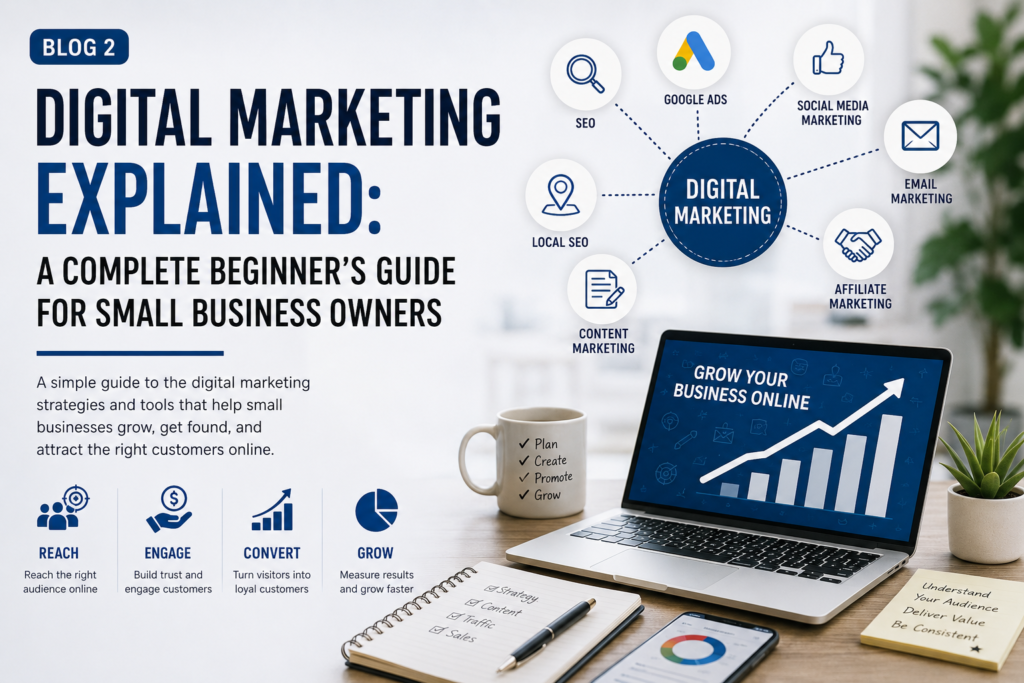
When I first heard the term digital marketing, I assumed it simply meant posting on Instagram or running advertisements on Google. But as I started learning, I realized digital marketing is much more than that. It's a collection of strategies that help businesses connect with the right audience, build trust, and grow using digital platforms.
Today, people spend hours online every day—searching for products, watching videos, reading reviews, comparing prices, and interacting with brands. This shift in consumer behavior has made digital marketing one of the most valuable tools for businesses of every size.
In this blog, I'll share what I've learned so far as a digital marketing student and explain digital marketing in a simple way that's easy to understand, especially for small business owners who want to grow online.
What is Digital Marketing?
Digital marketing is the practice of promoting products, services, or brands using online platforms and digital technologies.
Unlike traditional marketing, digital marketing allows businesses to communicate directly with their audience, measure results, and improve campaigns based on real data.
Some of the most common digital channels include:
- Websites
- Search engines
- Social media
- Online advertising
- Video platforms
- Mobile applications
The goal isn't just to reach more people—it's to reach the right people at the right time.
Why Digital Marketing Matters
Imagine opening a beautiful clothing store. If no one knows it exists, it becomes difficult to attract customers. Digital marketing helps solve this problem by making your business visible where people already spend their time: online.
Some benefits include:
- Increased brand awareness
- Better customer engagement
- Affordable marketing options
- Measurable results
- Targeted advertising
- Stronger customer relationships
For small businesses, digital marketing creates opportunities to compete with larger brands without requiring massive budgets.
Building a Strong Online Presence
A strong online presence starts with a professional website.
Think of your website as your digital storefront. It should clearly explain who you are, what you offer, and how customers can contact you.
An effective website should:
- Load quickly
- Be mobile-friendly
- Be easy to navigate
- Include clear calls to action
- Provide valuable information
Your website becomes the foundation of your digital marketing efforts.
Search Engine Optimization (SEO)
SEO, or Search Engine Optimization, is the process of improving your website so it appears higher in search engine results.
For example, if someone searches for "best bakery near me", Google tries to show the most relevant websites.
SEO helps your business become one of those results.
Good SEO includes:
- Creating helpful content
- Using relevant keywords naturally
- Improving website speed
- Writing clear page titles and descriptions
- Making your website mobile-friendly
- Building quality backlinks
SEO is a long-term strategy, but it can bring consistent traffic without paying for every visitor.
Search Engine Marketing (SEM)
While SEO focuses on organic traffic, SEM involves paid advertising through search engines.
Google Ads is one of the most common SEM platforms.
Businesses bid on keywords so their ads appear when users search for specific products or services.
For example:
A plumbing company may advertise for the keyword:
Emergency plumber near me
This allows them to reach customers who are actively looking for help.
Social Media Marketing
Social media allows businesses to connect directly with customers.
Popular platforms include:
- YouTube
- TikTok
- X (formerly Twitter)
Good social media marketing is about creating conversations, sharing useful content, and building a community—not just promoting products.
Content Marketing
Content marketing focuses on educating, entertaining, or helping your audience before trying to sell.
Examples include:
- Blog posts
- Videos
- Infographics
- Podcasts
- Guides
- Tutorials
High-quality content builds trust, improves SEO, and encourages people to return to your website.
Email Marketing
Email remains one of the most effective digital marketing channels.
Businesses use email to:
- Welcome new customers
- Share updates
- Promote offers
- Educate subscribers
- Build long-term relationships
Successful email marketing focuses on providing value rather than sending constant promotions.
Influencer & Affiliate Marketing
Influencer marketing involves partnering with creators who already have an engaged audience.
Affiliate marketing allows individuals to earn a commission by promoting products and driving sales.
Both strategies help businesses reach new audiences through trusted recommendations.
Local SEO
For businesses that serve a specific area, Local SEO is essential.
Optimizing your business profile, collecting customer reviews, and maintaining accurate contact information helps your business appear in local search results and map listings.
Measuring Success with Analytics
One of digital marketing's greatest strengths is that almost everything can be measured.
Businesses can track:
- Website visitors
- Clicks
- Conversions
- Bounce rate
- Customer demographics
- Campaign performance
These insights help businesses make better marketing decisions.
AI in Digital Marketing
Artificial Intelligence is changing how marketers work.
AI can help with:
- Content ideas
- Keyword research
- Email personalization
- Chatbots
- Customer support
- Campaign optimization
However, AI works best when combined with human creativity, strategy, and empathy.
Common Beginner Mistakes
Many businesses make these mistakes when starting digital marketing:
- Trying to be active on every platform
- Ignoring their website
- Posting without a strategy
- Focusing only on selling
- Not measuring results
- Giving up too quickly
Digital marketing is a long-term process that rewards consistency.
What I've Learned
As I continue learning digital marketing, one thing has become very clear: success isn't about using every marketing tool available. It's about understanding your audience, choosing the right channels, and consistently providing value.
Technology will continue to evolve, but businesses that focus on helping their customers will always have an advantage.
Frequently Asked Questions
Do I need a website?
Yes. A website gives your business credibility and serves as the central hub for your digital marketing efforts.
Is social media enough?
No. Social media is important, but it should work alongside your website, SEO, content, and email marketing.
How long does digital marketing take to show results?
Some strategies, like paid advertising, can deliver quick results. Others, like SEO and content marketing, often take several months but provide long-term value.
Final Thoughts
Digital marketing isn't just about technology—it's about connecting with people in meaningful ways. Every website, blog post, social media update, and email is an opportunity to educate, build trust, and strengthen relationships with your audience.
As I continue learning, I realize that digital marketing is always evolving. New tools and platforms will appear, but the core principle remains the same: understand your audience, create value, and communicate consistently.
In the next blog, we'll explore how Google ranks websites, how SEO works behind the scenes, and how AI is changing the future of online marketing.